

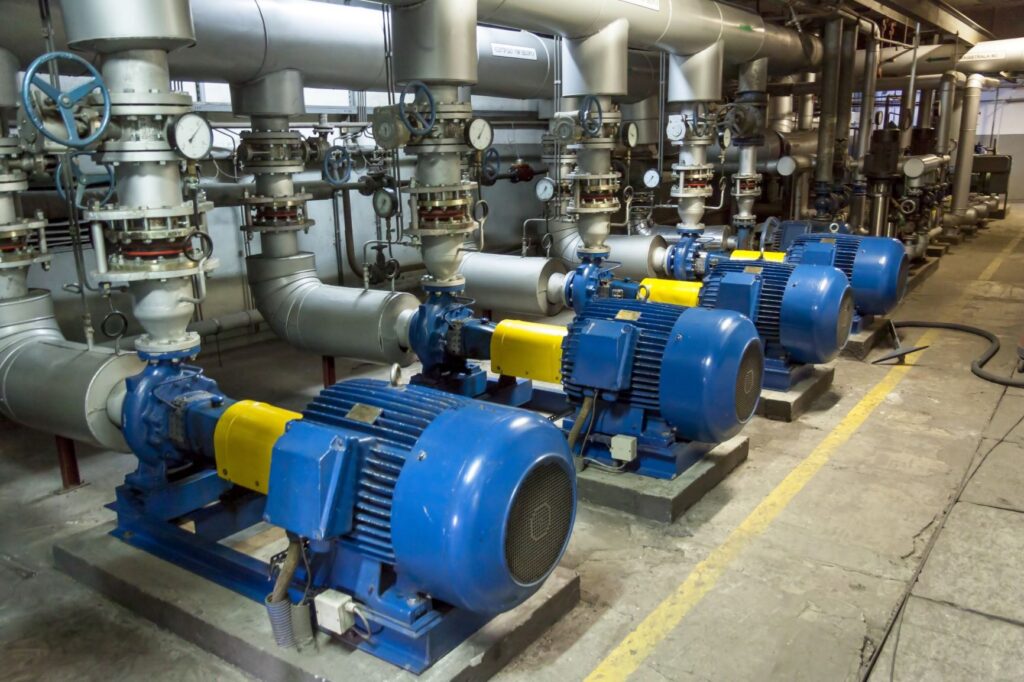
Wastewater Pumps
Wastewater pumps are specialized pumps used to move wastewater from one location to another, typically in sewage and water treatment systems. They are essential components in municipal, industrial, and residential wastewater management.
Types of Wastewater Pumps:
- Submersible Pumps:
Installed directly inside the wastewater or sewage pit. Ideal for handling solids and used widely in sewage treatment plants. - Centrifugal Pumps:
Use centrifugal force to transport wastewater. Suitable for large volumes and used in treatment plants and industrial applications. - Positive Displacement Pumps:
Move fixed amounts of wastewater with each cycle. Best for viscous fluids and sludge. - Grinder Pumps:
Equipped with cutting blades to shred solids into smaller particles before pumping. Common in residential or small-scale systems. - Sewage Pumps:
Specifically designed to handle raw sewage containing solids. Often submersible and used in lift stations.
Key Features:
- Corrosion-resistant construction
- Ability to handle solids
- High flow and head capacity
- Reliable and low-maintenance designs
Key Components of Wastewater Pumps
Understanding the key components of wastewater pump is essential for selecting the right equipment and ensuring long-term operational efficiency. Wastewater pump are designed to withstand the harsh conditions found in wastewater environments—such as corrosive liquids, abrasive solids, and varying pressures.
1. Impellers
Impellers are the heart of any pump, responsible for moving the fluid. Their design directly impacts the pump’s efficiency and ability to handle solids:
2. Casings and Housings
The casing encloses the impeller and directs the flow of wastewater. It must be built from durable, corrosion-resistant materials such as:
- Cast iron
- Stainless steel
- Thermoplastics
This ensures the pump can withstand the corrosive and abrasive nature of wastewater, especially for submersible pump that remain constantly submerged.
3. Seals and Bearings
- Seals: Prevent leakage and protect internal components from contamination. Mechanical seals are preferred in wastewater applications due to their durability and resistance to pressure.
- Bearings: Reduce friction between moving parts, supporting smooth and efficient operation over long periods.
4. Motors and Drives
The motor provides the driving force behind the pump. Key motor types include:
- Electric motors (most common)
- Diesel motors (used in remote or emergency applications)
To enhance energy efficiency, many systems incorporate Variable Frequency Drives (VFDs), which adjust motor speed based on real-time demand—resulting in better performance and energy savings.
Applications:
- Sewage treatment plants (STPs)
- Effluent treatment plants (ETPs)
- Industrial wastewater handling
- Drainage systems
- Residential and commercial wastewater transfer

7 Comments