RO Membranes
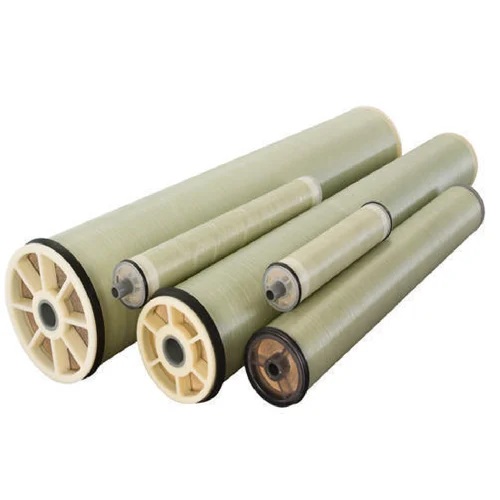
A Reverse Osmosis (RO) or RO membrane is a semi-permeable barrier that plays a crucial role in water purification by allowing water molecules to pass through while blocking contaminants such as salts, heavy metals, bacteria, and organic compounds. This process is driven by applying pressure to overcome natural osmotic pressure, effectively separating pure water from impurities. Let’s see in detail about RO Membranes.
Types of RO Membranes
RO membranes are primarily categorized based on their material composition and specific applications:
- Thin-Film Composite (TFC) Membranes: These are widely used due to their high rejection rates and durability. They consist of a polyamide layer atop a porous support, effectively removing a broad range of contaminants.
- Cellulose Acetate (CA) Membranes: An older technology, CA membranes are less resistant to high pH and temperature variations and have lower rejection rates compared to TFC membranes.
- CTA (Cellulose Triacetate) Membranes: These membranes offer better chlorine tolerance than TFC membranes but generally have lower rejection rates.
Applications
RO membranes are utilized across various sectors
- Residential Use: Under-sink systems for providing clean drinking water.
- Commercial and Industrial Use: In industries like food and beverage, healthcare, and manufacturing for producing high-purity water.
- Desalination: Converting seawater into potable water, especially in regions facing water scarcity.
- Agriculture: Providing purified water for irrigation and livestock.
Maintenance and Lifespan
The lifespan of an RO membrane varies based on usage and water quality. Typically, membranes in residential systems last between 1 to 3 years. Regular maintenance, including pre-filter replacements and system sanitization, can extend membrane life.
Recent Developments
Recent research has challenged the traditional “solution-diffusion” model of RO membranes. A study led by Menachem Elimelech at Yale introduced the “solution-friction” theory, suggesting that water moves through transient pores in clusters, driven by pressure rather than diffusion. This insight could lead to the development of more energy-efficient membranes with improved contaminant rejection capabilities.