
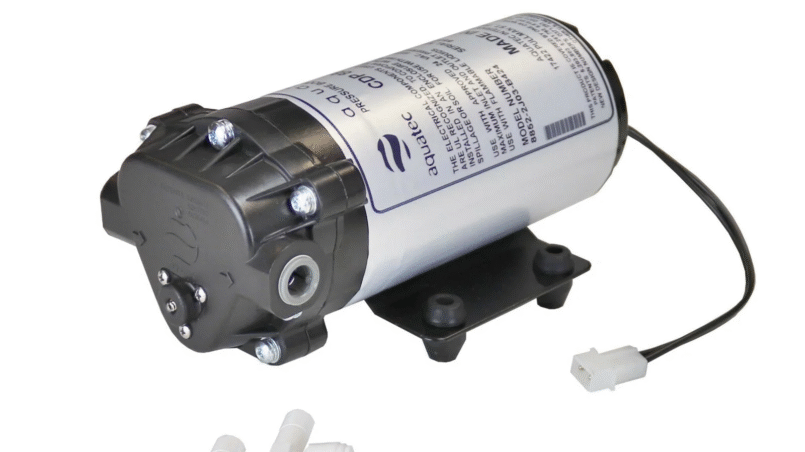
RO Booster Pump – Introduction
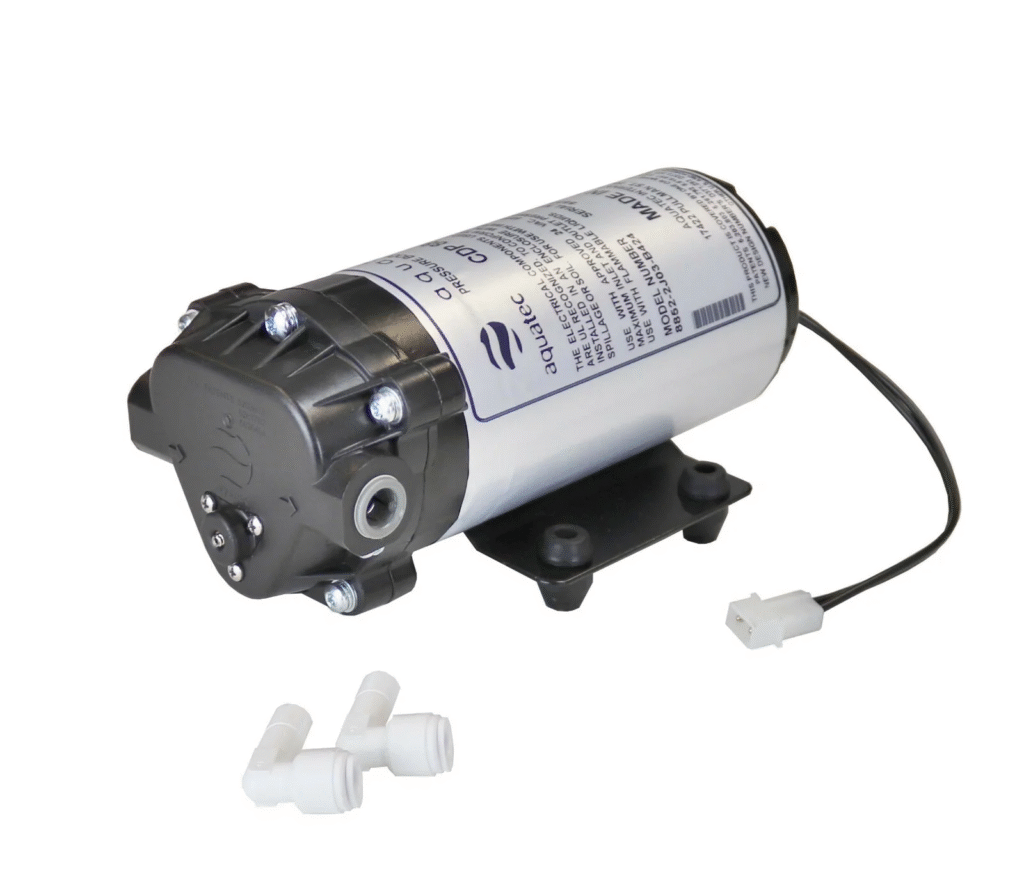
An RO booster pump is a specialized pump designed to increase the water pressure supplied to a Reverse Osmosis (RO) water purification system. RO systems rely on sufficient inlet water pressure to force water molecules through the semi-permeable RO membrane, leaving behind dissolved salts, impurities, and contaminants. In areas where the feed water pressure is too low, an RO booster pump ensures optimal system performance and water quality.
Why RO Systems Need a Booster Pump
Reverse Osmosis membranes typically require an inlet water pressure between 50–80 psi (3.4–5.5 bar) for efficient operation. If the feed water pressure is too low:
- The water production rate decreases.
- TDS (Total Dissolved Solids) removal efficiency drops.
- The RO membrane may become fouled more quickly due to slower water flow.
An RO booster pump overcomes these problems by increasing pressure, ensuring the RO system operates at its best capacity.
Applications of RO Booster Pumps
- Domestic RO Water Purifiers – Used in homes where water supply pressure is insufficient.
- Commercial RO Systems – In offices, hotels, and restaurants for continuous, high-quality water production.
- Industrial RO Plants – In factories and water treatment facilities to handle large-scale water purification.
- Borewell and Tank-fed RO Systems – Where water sources typically have low or fluctuating pressure.
Types of RO Booster Pumps
- Diaphragm Booster Pumps
- Most common in domestic and small commercial RO units.
- Quiet operation, compact size, and energy efficiency.
- Centrifugal Booster Pumps
- Used in larger commercial or industrial RO systems.
- Capable of handling higher flow rates and pressures.
- Multi-Stage Booster Pumps
- For large-scale applications requiring very high pressure.
- Consist of multiple impellers in series to progressively increase pressure.
Key Features
- Pressure Regulation – Maintains consistent inlet pressure to the RO membrane.
- Compact Design – Fits easily into residential RO units.
- Low Energy Consumption – Designed for efficient, continuous operation.
- Quiet Performance – Most domestic pumps are built for minimal noise.
- Durable Construction – Made from corrosion-resistant materials to ensure a long lifespan.
Benefits of Using an RO Booster Pump
- Improved Water Quality – Ensures optimal TDS reduction and contaminant removal.
- Increased Water Output – Higher production rate from the RO system.
- Extended Membrane Life – Reduces fouling and scaling by maintaining proper flow.
- Stable Performance – Consistent water pressure regardless of fluctuations in the supply.
Maintenance Tips
- Regular Cleaning – Prevents scaling and sediment buildup.
- Check Pressure Levels – Monitor inlet and outlet pressures to detect issues early.
- Replace Worn Parts – Diaphragm and seals should be replaced periodically.
- Avoid Dry Running – Running the pump without water can cause severe damage.
Conclusion
An RO booster pump plays a critical role in ensuring that reverse osmosis systems operate at peak efficiency, especially in areas with low or inconsistent water pressure. By providing the necessary pressure for effective filtration, it not only improves water quality but also extends the life of the RO membrane and other system components. Whether for home, commercial, or industrial use, choosing the right booster pump ensures reliable, high-quality purified water.

Right now it sounds like WordPress is the preferred blogging platform out there right now. (from what I’ve read) Is that what you are using on your blog? http://www.hairstylesvip.com
Hello There. I found your blog the use of msn. This is a really well written article. I will make sure to bookmark it and come back to read extra of your useful info. Thanks for the post. http://www.kayswell.com
I am really impressed with your writing skills as well as with the layout on your blog. Is this a paid theme or did you modify it yourself? Anyway keep up the nice quality writing, it is rare to see a nice blog like this one nowadays. http://www.kayswell.com
First off I would like to say superb blog! I had a quick question which I’d like to ask if you don’t mind. I was interested to find out how you center yourself and clear your thoughts before writing. http://www.ifashionstyles.com I have had a difficult time clearing my mind in getting my ideas out there.I truly do take pleasure in writing but it just seems like the first 10 to 15 minutes are