Paddle Wheel Aerator -Introduction
A paddle wheel aerator is a widely used mechanical aeration device designed to improve the oxygen level in water bodies, particularly in aquaculture ponds. It is one of the most efficient and cost-effective methods to increase dissolved oxygen, ensuring a healthy aquatic environment for fish, shrimp, and other aquatic organisms.
What is a Paddle Wheel Aerator?
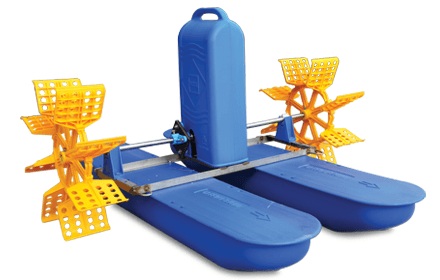
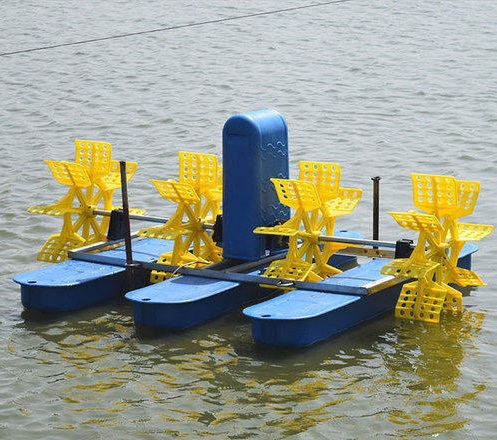
A paddle wheel aerator consists of a motor-driven wheel with paddles that rotate at the water’s surface. As the paddles turn, they splash water into the air, allowing oxygen from the atmosphere to dissolve into the pond. This process also promotes water circulation, which prevents stagnation and distributes oxygen evenly throughout the pond.
Key Features
- Efficient Oxygen Transfer: Quickly increases dissolved oxygen levels in water.
- Strong Water Agitation: Ensures circulation, reducing the chances of stratification.
- Simple Design: Easy to operate, install, and maintain.
- Energy Efficient: Consumes less power compared to some other aeration methods.
Working Principle of paddle wheel aerator
The motor powers the paddle wheel, causing the paddles to rotate. When the paddles strike the water surface, they create splashes and fine droplets, exposing a larger surface area to air. This enhances oxygen absorption while simultaneously pushing water forward, creating a strong current for better mixing.
Applications
- Aquaculture: Commonly used in fish and shrimp farming to maintain high oxygen levels for better growth and survival rates.
- Wastewater Treatment: Helps in aerating lagoons and ponds, promoting aerobic bacterial activity for wastewater purification.
- Water Management: Useful in lakes and reservoirs to prevent eutrophication and maintain water quality.
Advantages
- Increases dissolved oxygen quickly and effectively.
- Prevents fish kills caused by low oxygen levels.
- Enhances feed conversion ratio (FCR) in aquaculture.
- Reduces harmful gas accumulation (like ammonia and hydrogen sulfide).
- Improves overall water quality.
Conclusion
The paddle wheel aerator is an indispensable tool in aquaculture and water treatment. Its simple yet effective design ensures adequate oxygen supply and water circulation, which directly supports aquatic health and productivity. With its proven efficiency and reliability, it continues to be a preferred choice for farmers and industries alike.