Oil Skimmer Machine – Introductsion:
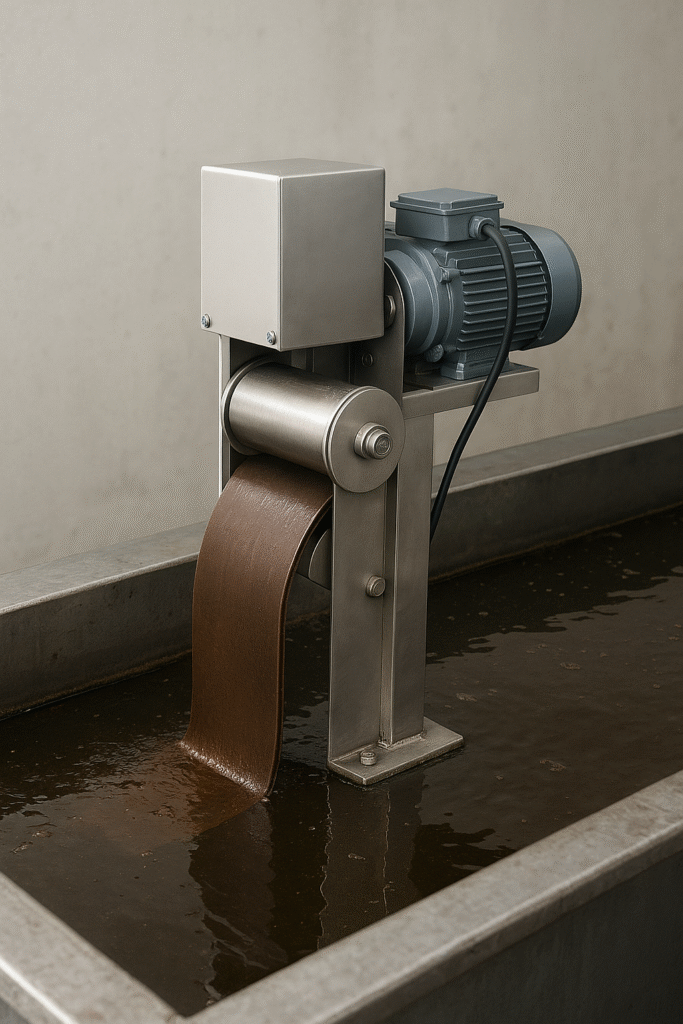
An oil skimmer machine is a device designed to remove oil, grease, and other floating contaminants from the surface of water or other liquids. It is widely used in industries like wastewater treatment plants, food processing, steel plants, chemical industries, machining workshops, and in environmental cleanup (such as oil spill recovery).
Working Principle of Oil Skimmer Machine
Oil skimmer machines work on the principle of separating oil from water based on the difference in specific gravity and surface tension. Since oil is lighter than water, it floats on the surface, where it can be collected using various skimming methods.
Types of Oil Skimmer Machines
- Belt Oil Skimmer
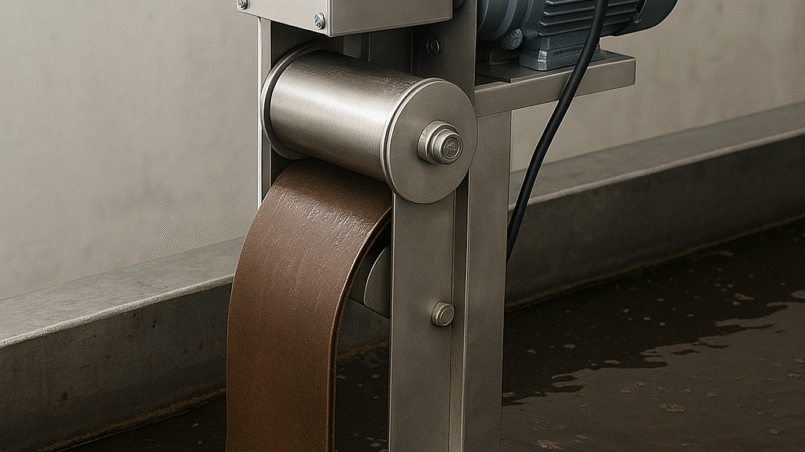
- Uses a rotating belt (made of stainless steel or special materials) that attracts oil.
- The oil is scraped off the belt and collected.
- Common in machine shops for coolant and wastewater treatment.
- Tube Oil Skimmer
- Uses a floating tube that collects oil from the surface.
- The oil adheres to the tube, which passes through a wiper system to remove oil.
- Disk Oil Skimmer
- Uses a rotating disk that attracts oil from the liquid surface.
- The oil is scraped off into a collection container.
- Drum/Barrel Oil Skimmer
- Employs a rotating drum that collects oil from the surface.
- Suitable for large-scale oil recovery, including oil spills.
- Weir Oil Skimmer
- Works by allowing oil to flow over a floating weir into a collection tank.
- Suitable for heavy oil spill cleanups.
Applications
- Sewage Treatment Plants (STP) & Effluent Treatment Plants (ETP) – removing oil and grease from wastewater.
- Machining & Manufacturing – removing tramp oil from coolants and cutting fluids.
- Food Processing Industry – separating edible oil or grease from wastewater.
- Petrochemical & Steel Plants – recovering oil and reducing water contamination.
- Environmental Cleanup – recovering oil from lakes, rivers, and seas after oil spills.
Benefits
- Reduces oil contamination in water.
- Increases the life of coolants and cutting fluids.
- Prevents blockages and damage in pumps and pipelines.
- Environmentally friendly – recovers reusable oil.
- Reduces treatment costs in wastewater management.