K1 Media
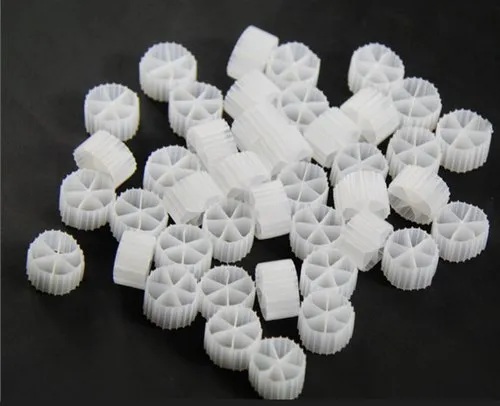
K1 Bio Filter Media or K1 Media is a type of moving bed biological filter media widely used in wastewater treatment, aquaculture, and pond filtration systems. It is designed to provide a high surface area for the growth of beneficial microorganisms, which help break down ammonia and nitrites into less harmful nitrates through the biological filtration process.
Key Features of K1 Media:
- High Surface Area: Offers approximately 800 m²/m³ of surface area, promoting efficient bacterial colonization.
- Self-Cleaning Motion: In Moving Bed Biofilm Reactors (MBBR), the media is constantly agitated, allowing dead biofilm to slough off and making it self-cleaning.
- Durable Material: Made from high-density polyethylene (HDPE), which is lightweight, non-toxic, and long-lasting.
- Neutral Buoyancy: Designed to be neutrally buoyant when colonized, ensuring effective mixing and oxygen transfer.
- Low Maintenance: Minimal clogging and no need for regular cleaning due to its continuous movement.
How It Works:
- Media Added to Aeration Tank:
- K1 media is introduced into an aeration tank or bio-reactor. The tank is partially filled with these small, wheel-shaped plastic media.
- Biofilm Formation:
- Beneficial bacteria (biofilm) begin to grow on the large surface area of the K1 media.
- The media provides a protected and stable environment for microbial growth.
- Continuous Movement:
- Air is injected into the tank, causing the K1 media to move freely and continuously throughout the water.
- This movement increases oxygen transfer and ensures all media are evenly mixed.
- Biological Treatment:
- As the wastewater flows through the tank, organic matter, ammonia, and other pollutants come into contact with the biofilm on the media.
- The bacteria consume and break down these contaminants through biological oxidation.
- Self-Cleaning Process:
- Old or dead biofilm naturally sloughs off due to the constant movement and abrasion between media.
- This ensures only active, healthy bacteria remain for efficient treatment.
Key Biological Processes Involved:
- Nitrification: Conversion of ammonia (NH₃) to nitrite (NO₂⁻), and then to nitrate (NO₃⁻)
- BOD/COD Reduction: Breakdown of organic matter, reducing Biological Oxygen Demand and Chemical Oxygen Demand
Applications:
- Wastewater Treatment Plants (STP/ETP)
- Aquaculture and Fish Farms
- Koi Ponds and Garden Ponds
- Industrial Effluent Treatment
Advantages:
- Enhances nitrification efficiency
- Reduces organic load and harmful compounds
- Easy to install and retrofit in existing systems
- Cost-effective biological treatment solution