
Filter Press Machine: Overview
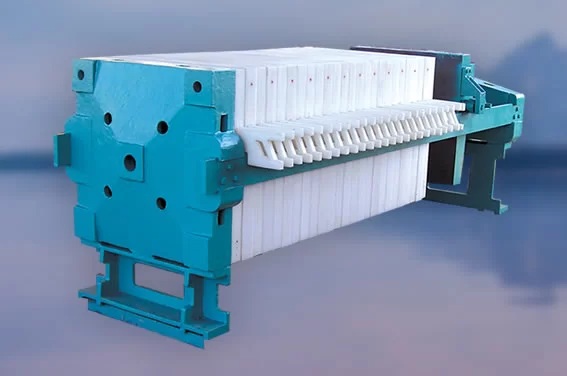
A filter press machine is an industrial equipment used for separating solids from liquids in slurry mixtures. It works by applying high pressure to force the liquid through a filtering medium, leaving the solid particles behind. This machine is widely used in industries such as wastewater treatment, chemical, pharmaceutical, mining, food and beverage, and textile processing.
Working Principle of a Filter Press
- Slurry Feeding: Slurry is pumped into the machine’s chambers formed by a series of filter plates.
- Filtration: As pressure is applied, the liquid passes through the filter cloth, leaving the solid particles (called filter cake) behind.
- Cake Formation: Solids accumulate and form a “cake” between the plates.
- Cake Discharge: After the cycle, the plates are opened, and the solid cake is removed.
- Plate Washing (optional): Plates and cloths may be washed automatically to maintain efficiency.
Types of Filter Press Machines
- Plate and Frame Filter Press:
- Oldest design
- Plates and frames alternate, forming a filter chamber
- Easy to operate but has a lower efficiency
- Recessed Chamber type:
- Most common type
- Features recessed plates that form chambers
- Effective for dewatering high-solid slurries
- Membrane type:
- Includes elastic membranes that squeeze the filter cake for higher dryness
- Offers faster cycles and improved moisture removal
- Automatic type:
- Fully automated operation
- Features automatic plate shifting, cake discharge, and cloth washing
Key Components
- Filter Plates
- Filter Cloths
- Hydraulic System
- Slurry Pump
- Plate Shifting Mechanism
- Control Panel
Applications
- Wastewater Treatment Plants – sludge dewatering
- Chemical Manufacturing – filtration of intermediates
- Pharmaceutical Industry – separation of active ingredients
- Food & Beverage – juice clarification, wine processing
- Mining & Minerals – tailings management
Advantages
- High solid-liquid separation efficiency
- Produces dry filter cakes, reducing disposal costs
- Can be automated for low manpower operation
- Environmentally friendly—reduces liquid waste
Limitations
- Initial cost can be high
- Requires regular maintenance of filter cloths
- Not suitable for very fine particles unless special cloths are used